
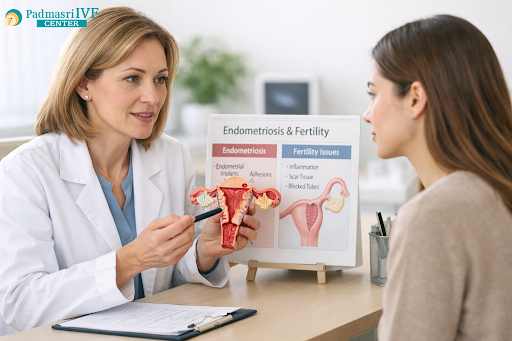
How Endometriosis Affects Fertility and Pregnancy Chances
Endometriosis is a common but often misunderstood condition that affects millions of women around the world. It occurs when tissue similar to the lining of the uterus grows outside the uterus, affecting organs such as the ovaries, fallopian tubes, and pelvic lining. This condition can cause severe pain, irregular menstrual cycles, and in many cases difficulty in getting pregnant.
For many women, the biggest concern with endometriosis is how it affects fertility and whether pregnancy is still possible. The good news is that many women with endometriosis can still conceive with the help of proper medical guidance and advanced fertility treatments. At Padmasri Hospitals and IVF Centre, specialists focus on diagnosing the condition early and offering personalized treatments that improve the chances of conception.
Today, advanced reproductive medicine has made it possible for women with endometriosis to become mothers successfully. Many couples choose expert fertility care at the Best fertility clinic in Andhra Pradesh to improve their chances of pregnancy and receive comprehensive reproductive support.
Understanding the relationship between endometriosis and fertility is important for women who are planning pregnancy. This blog explains the causes, symptoms, diagnosis, treatment options, and ways to improve pregnancy chances for women living with this condition.
What is Endometriosis?
Endometriosis is a chronic gynecological condition in which tissue similar to the uterine lining grows outside the uterus. This tissue behaves like the normal uterine lining and responds to hormonal changes during the menstrual cycle.
However, because the tissue is located outside the uterus, it cannot exit the body during menstruation. Over time, this can lead to inflammation, scar tissue, adhesions, and damage to reproductive organs.
Large numbers of women are diagnosed with endometriosis during their reproductive years. Many of them experience symptoms such as pelvic pain and painful periods, while some women only discover the condition when they face fertility challenges.
Doctors at Padmasri Hospitals and IVF Centre emphasize early diagnosis because untreated endometriosis may gradually affect reproductive organs and reduce natural pregnancy chances.
How Common is Endometriosis in Women?
Endometriosis is more common than many people realize. Studies suggest that nearly one in ten women of reproductive age may experience this condition.
Many women remain undiagnosed for years because symptoms are sometimes mistaken for normal menstrual pain. Some women may not experience noticeable symptoms at all until they start trying to conceive.
This is why regular gynecological check-ups are important for reproductive health. Specialists at Padmasri Hospitals and IVF Centre use advanced diagnostic techniques to identify endometriosis at an early stage.
Symptoms of Endometriosis
Endometriosis symptoms can vary from woman to woman. Some women experience severe discomfort while others may have mild symptoms.
- Severe pelvic pain during menstrual periods that may worsen over time and interfere with daily activities.
- Pain during or after sexual intercourse, which can affect emotional well-being and relationships.
- Heavy or irregular menstrual bleeding that lasts longer than usual.
- Pain during bowel movements or urination during menstrual cycles.
- Difficulty getting pregnant even after trying for a long period of time.
How Endometriosis Affects Fertility
Endometriosis can affect fertility in several ways. The condition may interfere with the normal functioning of reproductive organs and reduce the chances of natural conception.
- Inflammation in the pelvic area may affect egg quality, sperm function, and embryo implantation.
- Scar tissue and adhesions can block or damage the fallopian tubes.
- Endometriosis cysts (endometriomas) may develop in the ovaries and affect egg quality.
- Hormonal changes may disrupt ovulation.
- Immune system responses may interfere with embryo implantation.
Stages of Endometriosis
Stage 1 – Minimal Endometriosis
Small patches of endometrial tissue are present with minimal inflammation and no significant scar tissue.
Stage 2 – Mild Endometriosis
More endometrial implants are visible and mild pelvic inflammation may occur.
Stage 3 – Moderate Endometriosis
Cysts may develop on the ovaries and scar tissue may begin affecting reproductive organs.
Stage 4 – Severe Endometriosis
Large cysts, extensive scar tissue, and adhesions may affect multiple pelvic organs and significantly impact fertility.
Can Women with Endometriosis Get Pregnant?
Yes, many women with endometriosis can still get pregnant. The chances of pregnancy depend on factors such as age, severity of the condition, ovarian health, and overall reproductive function.
Some women may conceive naturally with lifestyle modifications and medical treatment. Others may benefit from assisted reproductive technologies such as IUI or IVF.
Treatment Options for Endometriosis and Fertility
- Pain management and hormonal therapy to control symptoms.
- Laparoscopic surgery to remove endometrial implants and cysts.
- Ovulation induction treatments to stimulate egg production.
- Assisted reproductive technologies such as IVF.
IVF Treatment for Endometriosis Patients
In vitro fertilization (IVF) is one of the most effective fertility treatments for women with moderate to severe endometriosis.
During IVF, eggs are retrieved from the ovaries and fertilized with sperm in a laboratory environment. The resulting embryo is then transferred to the uterus.
- Bypasses blocked or damaged fallopian tubes.
- Improves fertilization success in a controlled laboratory environment.
- Increases pregnancy success rates for women with advanced endometriosis.
Lifestyle Tips to Improve Fertility with Endometriosis
- Maintain a balanced diet rich in antioxidants, fruits, vegetables, and omega-3 fatty acids.
- Engage in regular physical activity.
- Manage stress through yoga or meditation.
- Avoid smoking and excessive alcohol consumption.
- Seek timely fertility consultation.
When Should You See a Fertility Specialist?
Women should consult a fertility specialist if they have been trying to conceive for more than one year without success.
Early consultation is also recommended if a woman experiences severe menstrual pain, irregular cycles, or symptoms of endometriosis.
Why Choose Padmasri Hospitals and IVF Centre for Advanced Fertility Care
Choosing the right fertility centre plays a crucial role in improving pregnancy success rates, especially for women dealing with conditions like endometriosis.
Padmasri Hospitals and IVF Centre provides comprehensive reproductive healthcare with advanced medical technology and experienced fertility specialists.
Patients receive access to modern fertility treatments including IVF, fertility evaluation, hormonal treatments, and reproductive health counselling.
Conclusion
Endometriosis is a complex condition that can affect fertility, but pregnancy is still possible with the right medical support. Early diagnosis, proper treatment, and advanced fertility care can help many women successfully conceive and deliver healthy babies.
With expert care at Padmasri Hospitals and IVF Centre, many couples have achieved their dream of parenthood through advanced fertility treatments and personalized medical guidance.
FAQs
1. Can endometriosis cause infertility?
Yes, endometriosis can affect fertility by causing inflammation, scar tissue, and damage to reproductive organs. However, fertility treatments can improve pregnancy chances.
2. Is pregnancy possible with endometriosis?
Yes, many women with endometriosis successfully become pregnant either naturally or with fertility treatments such as IVF.
3. What is the best treatment for endometriosis infertility?
Treatment options include medications, laparoscopic surgery, ovulation induction, and IVF depending on the severity of the condition.
4. Does IVF work for endometriosis patients?
Yes, IVF is one of the most effective fertility treatments for women with moderate to severe endometriosis.
5. When should I consult a fertility doctor for endometriosis?
Women should consult a fertility specialist if they have severe pelvic pain or have been trying to conceive for more than a year without success.